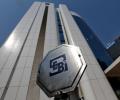
The Supreme Court on Friday asked the Securities and Exchange Board of India (SEBI) what the capital markets regulator intends to do for ensuring the protection of investors from extreme volatility in the stock market.

Domestic mutual funds (MFs) have underpinned demand for most public floats this year, dominated by small- and mid-sized initial public offerings (IPOs). Of the 24 IPOs that have hit the market so far this financial year (2023-24, or FY24), MFs have played the role of 'anchor investors' in 20. They have subscribed to over 40 per cent, or Rs 2,850 crore, worth of shares of the Rs 6,900 crore on offer in the anchor category, according to data provided by PRIME Database, a firm that tracks primary market data.

The development comes after Sebi received representations from listed entities, chartered accountant firms, and industry bodies, seeking further extension of time for filing of financial results for the quarter/half year/financial year ended March 31, 2020.

The initial public offering of the country's largest insurer LIC will open on May 4 and close on May 9, sources said. The IPO, through which the government will sell 3.5 per cent stake in state-owned Life Insurance Corporation (LIC), will fetch Rs 21,000 crore to the exchequer. The IPO values LIC at Rs 6 lakh crore.
Markets regulator Sebi has reduced the minimum lock-in period for promoters' investment post an initial public offering (IPO) to 18 months from three years, under certain conditions. The move comes at a time when many companies are looking to list on the stock exchanges. In addition, the Securities and Exchange Board of India (Sebi) has streamlined disclosures requirements of group companies.

Telecom regulator Trai on Monday said that it is working on various technologies to detect pesky calls and messages along with a joint action plan with other regulators to curb financial frauds. The Telecom Regulatory Authority of India (Trai) said that Unsolicited Commercial Communication (UCC) or pesky communication is a major source of inconvenience to the public and impinges on the privacy of individuals. "Now complaints are reported against Unregistered Telemarketers (UTMs), where a surge has been seen in pushing various kinds of UCC SMSes. Additionally, UCC calls are also one of the concerns which need to be dealt with equally along with UCC SMSes," it said.

Auditor Deloitte flagged three transactions, including recoveries from a contractor identified in the Hindenburg report, as it issued a qualified opinion on the accounts of Adani Ports & Special Economic Zone.

New Delhi Television (NDTV) has deferred its Annual General Meeting (AGM) by a week to September 27, the company said in a regulatory filing on Sunday. The AGM was originally scheduled to be held on September 20. The media company said that the deferment was due to the processes required after the notice and public announcement of the open offer made by Vishvapradhan Commercial (VCPL), an indirect subsidiary of Adani Enterprises, to its public shareholders.

Online mutual fund (MF) investment platforms like Groww, Zerodha Coin and Paytm Money, which allow investments in direct MF schemes for free, will soon be able to charge their customers or the fund houses for executing transactions. "They can charge some money but commission-like structure won't be allowed," Madhavi Puri Buch, chairperson of the Securities and Exchange Board of India (Sebi), said on Tuesday. At present, none of these online investment platforms generate any revenue through the MF sales.

The Supreme Court has agreed to hear on Friday a plea seeking a direction to the Centre to constitute a committee monitored by a retired apex court judge to inquire and investigate into the Hindenburg Research report which has made a slew of allegations against the business conglomerate led by industrialist Gautam Adani.

The equity cult has grown at a rapid pace in India in the last few years, with retail investors latching on to the stock markets like never before. At 126.6 million, the number of dematerialised (demat) accounts, where investors hold their securities in electronic form for trading purposes, are at record high levels. The growth rate, on an annualised basis, stood at 27 per cent in 2022-2023, up from barely 6 per cent a decade ago.

Companies, which missed out on listing earlier, are giving it another shot but with significantly-reduced issue sizes. In the recent past, companies such as TVS Supply Chain Solutions, Suraj Estate Developers, and ESAF Small Finance Bank have re-filed their draft red herring prospectuses (DRHPs) with the Securities and Exchange Board of India (Sebi). This came after they slashed their issue sizes by 20-60 per cent.

Since April there have been no new NFOs because of the delay in the implementation of the new norms around pooling of funds.

MCX Stock Exchange (MCX-SX) continued its tirade against the Securities and Exchange Board of India (Sebi), alleging "discrimination" and "character assassination" while rejecting its application for launching a full-fledged stock exchange.

"The 'red bag' belonged to one of the hijackers, it contained explosives, and possibly, real passports, too.

It is a good option for parents of girl children who want a debt product and do not mind its low liquidity.

Market regulator Securities and Exchange Board of India (Sebi) in its investigation against Indiabulls Housing Finance has found the mortgage financier non-compliant with regards to unavailability of certain information on its website as well as its internal policy. Thereby, it has directed the company to take corrective measures and inform the stock exchanges in a months' time. Several public interest litigations (PILs) and FIRs were filed against Indiabulls Housing Finance back in 2019, alleging irregularities, siphoning of funds, and other violations committed by the promoters of the company.
Life Insurance Corporation (LIC) may require at least five more years to comply with the minimum public shareholding of 25 per cent beyond the current exempted timeline of 2027. Formal communication in this regard had been shared recently with the finance ministry, underlining LIC's roadmap, plans of further dilution of stake, current norms around public float, and challenges ahead, a government source familiar with the matter said. "Going forward, we will have to take a call, along with Sebi (Securities and Exchange Board of India) and the Department of Economic Affairs on the roadmap for minimum public shareholding (MPS).

The Securities and Exchange Board of India (Sebi) has notified stricter timelines of just seven working days for foreign portfolio investors (FPIs) to disclose vital information. This could include informing their custodians about any false or misleading information about the fund or disclosing any change in structure or common ownership, or control of the investor group. The new changes have been brought into effect from March 14 through a notification amending the Sebi (FPIs) Regulations.

The latest whistle-blower revelations of multiple shenanigans at global ride-hailing app Uber, coming thick and fast after serial exposes of various dodgy practices at Facebook, Apple, Amazon, Netflix, Google in the recent past raises uncomfortable questions about India Inc. If the FAANGs, Twitter and Uber can be guilty of multiple and diverse transgressions what's happening in Indian corporations? It can be nobody's case that India's largely family-owned and - managed private sector is a beacon of transparency or best corporate governance practices, bolstered as it is by an informal omerta among employees, managements and even boards.

Ramkrishna is in the news after a recent Sebi order said she was steered by a yogi, dwelling in the Himalayan ranges, in the appointment of Anand Subramanian as the exchange's group operating officer and advisor to the managing director (MD).

PSBs were required to bring down government shareholding to at least 75 per cent, to comply with the amended Securities Contract (Regulations) Rules by August 2017.

Gender diversity at the top can improve financial returns.

SEBI has published data showing that more than 90 per cent of investors lose money in futures and options, explains Harsh Roongta.

The Securities and Exchange Board of India proposes to levy fee on stock exchanges.

The National Stock Exchange (NSE), which is once again in the eye of a storm due to the co-location scandal, has said it has taken several transformational steps in the past few years on the regulatory, technological, and surveillance fronts to help improve stakeholder experience and to protect investors. Senior officials of the exchange briefed the media over the steps the exchange has taken on various fronts following changes at the helm with former managing director and chief executive officer Chitra Ramkrishna's ouster in December 2016. "Over the last few years, we have been looking to modernise and transform the entire value chain of technology.

With an aim to recover fines from elusive offenders, capital markets regulator Sebi on Thursday introduced a reward system for up to Rs 20 lakh to informants for sharing information about the assets of defaulters. The reward may be granted in two stages -- interim and final. While the interim reward amount will not exceed two and a half per-cent of the reserve price of the asset regarding which tips was provided or Rs 5 lakh, whichever is less and the final reward amount will not exceed 10 per cent of the dues recovered or Rs 20 lakh, whichever is less.
According a fast track status to the sale of 10 per cent equity each in Oil and Natural Gas Corporation and Gail, the government on Monday said that financial advisors cum lead managers would be appointed by this week for the two issues.

The Securities and Exchange Board of India's (Sebi's) investigation into the Hindenburg allegations is making slow progress when it comes to obtaining information from overseas regulators, particularly around ultimate beneficial ownerships of certain foreign portfolio investors (FPIs), said people in the know. "Establishing ultimate beneficial ownerships for FPIs is a very complex exercise. "Several jurisdictions allow omnibus structures where the end beneficiaries are not required to be captured or are based in some other geographies.

The Securities and Exchange Board of India (Sebi) is discussing with mutual funds (MFs) a proposal on introducing new total expense ratio (TER) slabs linked to the total equity and debt assets by replacing the current ones that are linked to assets of an individual scheme. Senior MF executives confirmed that Sebi had held discussions on this matter with AMCs. Such a change is expected to lead to a lower TER cap for bigger asset management companies (AMCs).

Cyrus Mistry, who was replaced as chairman of Tata Sons last Monday, October 24, still serves as the chairman of Tata Steel, Tata Motors, Tata Consultancy Services, Indian Hotels, Tata Global Beverages, Tata Chemicals, Tata Industries and Tata Teleservices.
After unfavourable response to the safety net, Sebi considers instruments with an option of conversion into equity.

Central Bureau of Investigation on Wednesday registered a record number of 46 cases in a day in connection with its probe in the Rs 10,000-crore Saradha chit fund scam naming Trinamool Congress' sitting Rajya Sabha MP Kunal Ghosh as one of the accused.

Recently, Sebi has revised the Code of Corporate Governance for listed companies significantly. Most revisions are in sync with the provisions in the Companies Act 2013, though some norms are stricter than those in the Companies Act 2013.
Move to make board accountable for performance appraisal.

The Securities and Exchange Board of India (Sebi) is mulling doing away with the priority distribution (PD) model in Alternative Investment Funds (AIFs) and introducing in the regulation pro-rata rights (based on the ratio of their commitments) for investors. AIFs are pooled investment vehicles but certain schemes have been observed to be following a differential distribution model where one class of investors, often a junior class, share loss more than the ratio of their contributions in comparison to the senior class of investors. As the senior class of investors have priority in distribution over the junior class of investors, the profit distribution is done first to these investors while they are compensated for loss out of the residual capital of junior class investors.

The size of Reserve Bank's balance sheet increased by 11.08 per cent to Rs 70.47 lakh crore as on March 2024, leading to the highest-ever dividend payout to the government, according to the central bank's annual report. In actual terms, the increase was Rs 7,02,946.97 crore over Rs 63.45 lakh crore as on March 2023.
